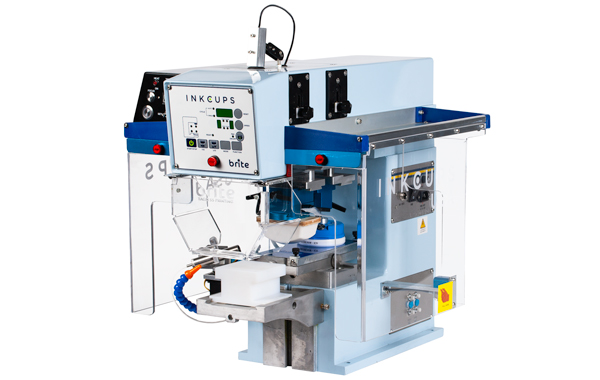
 Tagless Printers
 Cylindrical Inkjet Printers
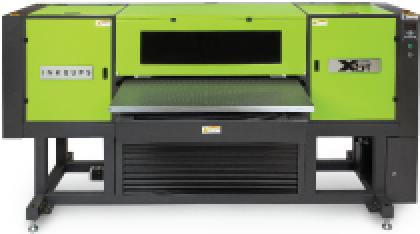 UV Flatbed Printers
 Pad Printing Machines
 Pretreatment Systems
 Inkjet Printing Auxiliary
 Laser Plate-Makers
 Inkjet Printing Supplies
 Pad Printing Supplies
 Tagless Supplies
Contrary to the name, a UV flatbed printer is not just for flat items. Advances in print technology, software, and machine upgrades allow more options than ever before beyond just a flat, one-dimensional item.
Blog

Contrary to the name, a UV flatbed printer is not just for flat items. Advances in print technology, software, and machine upgrades allow more options than ever before beyond just a flat, one-dimensional item.
The term “flatbed” in UV flatbed printer refers to the table-type that holds the parts for printing. The print aspect of it is a truly digital process. The artwork is created in graphical software and imported into the machine’s software where it applies this 2D image onto a three-dimensional object. The flatbed is the transport mechanism for the parts into the machine. As the parts travel into the machine, a print head will move back and forth over the parts laying down ink.
Learn more about UV inkjet printers
UV flatbed printers can print directly onto a wide range of rigid products and materials. Although all flatbed printers are designed to print on flat surfaces, some models can also accommodate taller objects, raised features, and slightly curved or uneven surfaces.
The exact capabilities depend on the printer’s maximum part height, printhead clearance, ink-jetting distance, software, and bed configuration. Products should always be evaluated and tested to confirm that the machine can maintain accurate ink placement and consistent image quality.
All UV flatbed printers can print on completely flat items, including sheets, panels, signage, promotional products, industrial components, and other rigid substrates., Most flatbed printers are capable of printing on items up to 2″ (50mm) in height. The 2″ height significantly limits the versatility of part options for the machine. There are flatbed printers that can print taller parts.
In addition to the height restriction, most machines are limited to the shape of a part. All flatbed printers will have success printing on completely flat items. The reason behind this is simple: the closer the print head can get to the surface of a part, the more accurate the drop placement, thus a better quality image. Some flatbed printers struggle printing on parts with a slightly curved surface because as the curve moves further away from the print head, the print quality degrades. The same can be said for flat items with raised surfaces. The print head is only able to lower itself to the highest point of the part.
Some flatbed printer machines can print on more than conventional flat materials. Capabilities vary by model. Printers with advanced software, adjustable beds, or high-throw printhead technology can place ink accurately across surfaces with moderate height variations. However, image quality may decline as the surface moves farther from the printhead, so deeply curved, highly textured, or irregular products may require specialized equipment or application testing. For cylindrical products that require full-wrap graphics, a dedicated cylindrical inkjet printer is typically the better option.
When choosing a UV flatbed printer,, remember to look for a machine capable of what you need now and what you may want for future projects. Meaning, if you only print on flat items less than 2″ in height now, it doesn’t mean you may want to expand your product offerings in the future.
Additional UV flatbed resources: All About UV Flatbed Printers
UV flatbed printer speed varies by machine, print area, resolution, ink configuration, number of passes, and product-loading process. Industrial models can often print a full bed of products in approximately two to three minutes, although designs that use white ink, varnish, multiple layers, or higher-quality print modes may take longer.
For example, the Inkcups X5-T can print across its full 43-by-24-inch bed in approximately two minutes and has a rated speed of up to 19 square meters per hour. Conveyorized flatbed printers can further improve production efficiency by allowing products to be loaded and unloaded continuously or incorporated into automated workflows.
The maximum thickness a flatbed printer can accommodate depends on the model and the amount of vertical clearance between the printing bed and printheads. Entry-level or conventional flatbed printers may be limited to relatively thin materials, while industrial printers with adjustable or drop tables can print much taller products.
Some industrial UV flatbed printers can accommodate items approaching 20 inches in height. For example, the Inkcups X5-T supports a maximum part height of 19.7 inches, or 500 millimeters, while the XJET 800-T supports products up to 18.1 inches, or 460 millimeters.
Finished UV flatbed prints can provide strong adhesion and abrasion resistance when the ink, substrate, surface preparation, and curing process are properly matched. Because ultraviolet lamps cure the ink during printing, the graphics are dry immediately and forms a hardened ink layer directly on the product’s surface.
The exact durability of a UV flatbed print depends on several factors:
Some materials accept UV ink without pretreatment, while lower-surface-energy or coated materials may require flame treatment, plasma treatment, or primer to achieve sufficient adhesion. The most durable result comes from testing the complete ink, substrate, and surface-preparation combination before production.
The maximum thickness a flatbed printer can accommodate depends on the model and the amount of vertical clearance between the printing bed and printheads. Entry-level or conventional flatbed printers may be limited to relatively thin materials, while industrial printers with adjustable or drop tables can print much taller products.
Some industrial UV flatbed printers can accommodate items approaching 20 inches in height. For example, the Inkcups X5-T supports a maximum part height of 19.7 inches, or 500 millimeters, while the XJET 800-T supports products up to 18.1 inches, or 460 millimeters.
UV flatbed printers are capable of much more than printing on flat sheets. Depending on the model, they can accommodate everything from tall and rigid materials to uneven surfaces, all while delivering durable, high-quality graphics. Explore Inkcups’ full range of UV printers to compare available technologies and find a solution that fits both your products and future printing needs.
Pleasant Printing Company
Thank you for your helpful article, I love this type of article.
March 4, 2021