For decades, manufacturers have relied on traditional decorating methods to add graphics, branding, and product information to molded parts. These methods have served the industry well, particularly when producing large quantities of identical products. But manufacturing needs are changing. Production runs are getting shorter, customers are requesting more variations of the same product, and artwork is changing more frequently than ever.
This is where direct-to-object (DTO) digital printing is opening new doors for manufacturers. Already widely adopted in industries such as drinkware, promotional products, and consumer goods, DTO technology is gaining attention for its potential in industrial manufacturing and injection molding applications.
What Is Direct-to-Object Digital Printing?
As the name suggests, direct-to-object digital printing involves printing artwork directly onto a finished three-dimensional object, rather than printing onto a label, film, or other intermediate material. Unlike traditional printing methods that require plates or screens, digital UV printing allows artwork to move directly from a digital file to the printer, reducing the need for physical print tooling and lengthy setups.
The process itself is relatively straightforward. Once the artwork is prepared, the product may undergo pretreatment to ensure proper ink adhesion. The artwork is then printed directly onto the object’s surface, where UV light cures the ink. The result is a finished, decorated product with high-resolution graphics.
One of the biggest advantages of this process is how easily artwork can be changed. A manufacturer can decorate hundreds of identical products with the same design, switch to an entirely different graphic, or even personalize individual items without the same physical setup requirements associated with traditional printing methods. This flexibility becomes particularly valuable when producing multiple designs in smaller quantities.
Why Is DTO Gaining Traction?
Take a look around your home or office. From reusable drinkware and promotional products to everyday consumer goods, digitally decorated products are becoming increasingly common. Much of this growth can be attributed to the demand for product variety and customization.
Consider a manufacturer producing one standard product that is sold to dozens of different customers. While the physical product remains the same, each customer may require its own branding, colors, or graphics. Seasonal promotions, regional variations, and limited-edition designs add another layer of complexity. Traditionally, accommodating these changes could mean additional printing setups, tooling, or inventory considerations.
With DTO digital printing, these variations can be managed through digital artwork changes rather than physical tooling changes. This gives manufacturers the ability to respond to customer requests, introduce new designs, and produce smaller batches without committing to the same setup requirements as conventional printing methods.
The value of DTO becomes increasingly apparent as product variety increases, artwork changes more frequently, and the quantity required per design decreases. For manufacturers balancing production efficiency with growing customer expectations, this flexibility can make a significant difference.
New Opportunities for Injection Molders
For injection molders, digital printing presents an opportunity to expand beyond producing the molded part itself. While molding technology continues to advance, the decoration of finished parts remains an important consideration, particularly for manufacturers serving customers with different branding or product requirements.
Imagine a manufacturer producing thousands of identical plastic components. The molded part remains unchanged, but the finished products are destined for different customers, each requiring unique graphics or product information. Rather than introducing those variations during the molding process, DTO printing allows manufacturers to decorate parts later in production.
This approach, known as late-stage product differentiation, can make it easier to create multiple decorated SKUs from a single molded component. It also presents opportunities for private-label products, regional branding, seasonal graphics, variable data, and specialty decorative effects.
However, one of the challenges associated with digitally decorating molded parts has historically been their geometry. Unlike a flat sheet or a straight-walled cylinder, molded components often feature curves, steps, tapers, and varying surface heights that can make printing difficult.
High Throw Technology Expands the Possibilities
Advancements in High Throw Technology are helping address some of these challenges. By increasing the distance over which ink can be accurately jetted, High Throw Technology makes it possible to decorate more complex three-dimensional surfaces that may have previously been difficult to accommodate with conventional digital printing equipment.
For injection molders, this is particularly interesting because it expands the types of parts that can be considered for digital decoration. Components with raised features, changing surface heights, and contoured areas are becoming more accessible as printing technology advances.
Of course, not every molded part will be a suitable candidate for DTO printing. Material compatibility, part geometry, pretreatment requirements, and production volume all play a role in determining whether digital printing is the right fit. However, as printhead technology and ink drop placement continue to improve, the range of potential applications is expected to grow.
For manufacturers already using in-mold labeling (IML) or in-mold decoration (IMD), the introduction of DTO printing raises an obvious question: Is digital printing intended to replace these established decorating methods?
Not necessarily. In fact, each technology has its own strengths, and the best choice depends largely on the application and production requirements.
IML and IMD are well-established solutions for high-volume manufacturing, particularly when artwork remains consistent and decoration needs to occur at the same rate as molding. For manufacturers producing substantial quantities of identical products, these processes offer proven production capabilities.
DTO digital printing, on the other hand, is particularly attractive when flexibility becomes a priority. Short- to medium-length production runs, frequent artwork changes, variable data, and late-stage decoration are all situations where digital printing can offer advantages.
Consider a manufacturer producing a large quantity of identical branded containers. If the design remains unchanged and production volumes are consistently high, IML may be an excellent fit. However, if that same manufacturer needs to produce dozens of design variations for different customers or seasonal promotions, DTO may provide a more practical decorating option.
Rather than viewing these technologies as competitors, manufacturers can consider how they might complement one another. The goal isn’t necessarily to replace an existing process, but to have more decorating options available as customer requirements evolve.
From Digital Printer to Digital Manufacturing Cell
While much of today’s conversation around DTO focuses on the capabilities of individual printers, the future of the technology extends beyond standalone equipment. As digital printing becomes more established in manufacturing environments, there is growing potential to integrate it into broader production processes.
Imagine a molded part moving through pretreatment, digital printing, and UV curing as part of one connected decorating line. Instead of treating printing as a separate operation, these steps could be integrated into a more automated manufacturing process, reducing the need for manual handling between stages.
Several technological advancements are helping move the industry in this direction. Improvements in High Throw Technology and ink drop placement are expanding the range of product geometries that can be decorated, while developments in flame, plasma, and adhesion-promoter pretreatment are helping address the challenges associated with different materials.
Automation will also play an important role. Connecting part handling, pretreatment, printing, and curing into a coordinated process could make DTO more practical for manufacturers looking to incorporate digital decoration into existing production environments. As throughput continues to improve, the production volumes at which digital printing becomes economically attractive may also increase.
Ultimately, the future of DTO may be less about the capabilities of a single printer and more about how digital decoration fits into the manufacturing process as a whole.
What’s Next for Direct-to-Object Digital Printing?
Direct-to-object digital printing has already demonstrated its value across numerous industries, and its potential in injection molding and industrial manufacturing continues to grow. What started as a flexible way to decorate finished products is evolving into a technology that could play a larger role in how manufacturers approach product differentiation.
For manufacturers, the opportunity isn’t necessarily to abandon established decorating processes. It’s to recognize where digital printing can provide additional flexibility, accommodate new product requirements, and create opportunities that may not have been practical before.
As High Throw Technology, automation, and pretreatment solutions continue to advance, more parts, shapes, materials, and production environments are becoming candidates for digital decoration. For injection molders looking to expand their capabilities and offer customers more decorating options, DTO is certainly a technology worth watching.
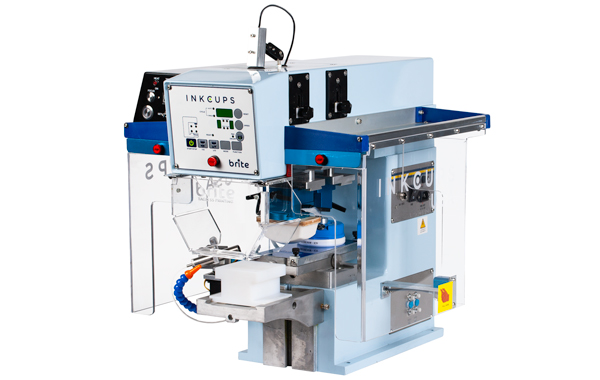 Tagless Printers
 Cylindrical Inkjet Printers
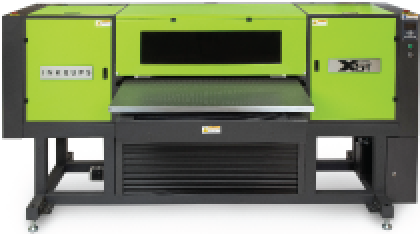 UV Flatbed Printers
 Pad Printing Machines
 Pretreatment Systems
 Inkjet Printing Auxiliary
 Laser Plate-Makers
 Inkjet Printing Supplies
 Pad Printing Supplies
 Tagless Supplies

Add Your Comment