- Production volume justifies the tooling investment. IML requires upfront investment in label tooling and mold design. For a packaging line producing millions of identical containers a year, that cost gets spread thin enough to make IML one of the most economical decoration methods available. For shorter runs, the math doesn’t work as well, which is a key reason many manufacturers pair IML with a digital method like direct-to-object printing for smaller batches.
- Packaging needs to survive its full lifecycle. A yogurt cup gets refrigerated, handled, and occasionally dropped. A detergent bottle sits in a damp laundry room for months. A paint can gets stacked in a warehouse. In every case, the label has to hold up to conditions that would peel or fade an adhesive label. Because the graphic is fused into the plastic itself, IML packaging resists moisture, abrasion, and fading far better than surface-applied alternatives.
- Regulatory and shelf-presence requirements favor consistency. Food, personal care, and household product packaging often carries required information (ingredients, warnings, usage instructions) that has to remain legible and accurate across an entire production run. IML’s process-driven consistency makes that dependable at scale in a way that manual or semi-automated labeling can struggle to match.
- The material streamlines recycling. When the label and container are made from compatible plastics, IML packaging can be recycled as a single material stream rather than requiring separation of a label from its substrate, which is an increasingly relevant consideration as brands face pressure to improve packaging sustainability.
Choosing IML for Your Application
IML earns its place across food, personal care, household, industrial, automotive, and electronics products for the same underlying reason: it delivers durable, consistent, integrated graphics at a cost per part that only makes sense at real production volume. If your product fits that profile, meaning a stable design and a high-volume run, IML is likely to be one of the most efficient decoration methods available to you.
If your production volumes are lower, your designs change frequently, or you need personalization and fast turnaround, it’s worth understanding how IML stacks up against digital alternatives. Our guides on what in-mold labeling is and how it works and when to choose IML versus direct-to-object printing can help you sort through which approach, or combination of approaches, fits your product line.
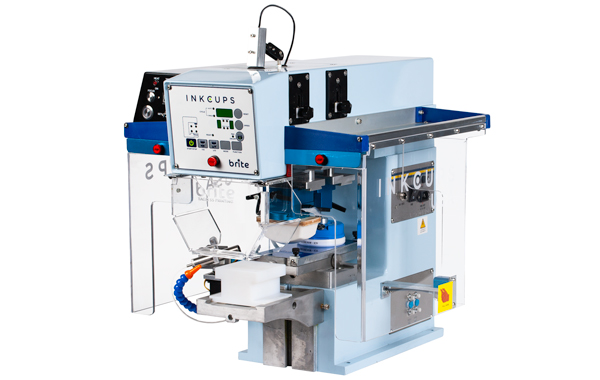 Tagless Printers
 Cylindrical Inkjet Printers
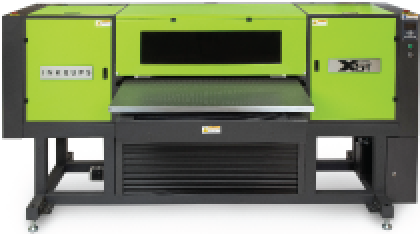 UV Flatbed Printers
 Pad Printing Machines
 Pretreatment Systems
 Inkjet Printing Auxiliary
 Laser Plate-Makers
 Inkjet Printing Supplies
 Pad Printing Supplies
 Tagless Supplies