If you run a small print shop, or you’re just getting started with in-house decoration, the idea of expanding into glass drinkware is exciting: full-color prints, premium perceived value, and a product category that sells. But then you start researching, and you hit a wall: pre-treatment. Most of your research leads you to believe an additional pre-treatment machine is required.
Pre-treatment for glass is real and necessary. But the good news? It doesn’t have to mean a major capital investment in dedicated equipment before you can get your first glass out the door.
Why Glass Needs Pre-Treatment in the First Place
Glass is a smooth, non-porous surface with naturally low surface energy. In plain English: ink doesn’t want to stick to it. Without some form of surface preparation, even the best UV inks will struggle to bond properly, leading to poor adhesion, easy scratching, and prints that won’t survive even a gentle hand wash.
There are three main pre-treatment approaches used in the industry:
- Primer wipe: a fast, manual application of a liquid primer before printing
- In-line primer system: automated primer application integrated into the print process
- Flame pre-treatment: a dedicated machine that uses flame to alter surface energy at the molecular level
Each method has trade-offs in terms of cost, throughput, and durability: specifically, how many dishwasher cycles the finished print will survive. Flame pre-treatment generally delivers the highest wash resistance, making it the right choice when customers demand top-rack dishwasher durability of 50+ cycles. But not every customer needs that: and for many smaller shops, the upfront cost of that equipment is too high when getting started.
The Budget-Friendly Starting Point: GL Primer Wipe
For shops that want to get into glass decoration without a major equipment investment, the GL primer wipe is the most accessible entry point: and it’s more capable than many people expect.
We’ve been testing the GL primer wipe paired with LV-R inks on the Helix ONE® cylindrical direct-to-object printer, printing directly onto glass pint glasses. The results have been encouraging: we’ve already surpassed 50 top-rack dishwasher cycles in ongoing testing, and the prints have passed standard abrasion evaluations: including crosshatch and tape tests: showing strong adhesion and solid durability for drinkware applications.
Twenty cycles isn’t the ceiling of what’s possible in glass decoration. But it’s a real, meaningful result: and it’s achievable with nothing more than a wipe, UV inks and a single cylindrical printer.
Key Industry Insight: For promotional drinkware, event merchandise, corporate gifts, and similar applications, 20 dishwasher cycles is often more than enough. Many customers in these segments aren’t looking for heirloom durability: they want a great-looking, full-color print at a fair price.
The Simple Three-Step Workflow: Helix ONE® for Glass Solution

Getting from bare glass to a finished print is straightforward:
- Step 1: Clean the glass. Remove any oils, fingerprints, or residue from the surface.
- Step 2: Apply the GL primer wipe. A light, even wipe across the print area is all it takes. No special equipment, no warm-up time.
- Step 3: Print on the Helix ONE® . Load your design, print directly onto the glass, and you’re done.
That’s it. No secondary machine sitting in the corner, no additional operator required, no extra floor space needed. For a small shop, that simplicity has real value.
The Business Case for Starting Small
One of the biggest advantages of starting with a GL primer wipe setup: beyond the low barrier to entry: is that you can begin taking glass orders immediately with equipment you may already be investing in. The Helix ONE® handles the printing. The primer wipe handles the prep. You’re up and running.
Full-color digital printing on glass opens up a product category that traditional screen printing or pad printing simply can’t match for short runs and custom designs. A single piece is just as cost-effective as a hundred. There are no screens to burn, no color separations, no setup fees eating into your margins on small orders.
And as your volume grows and your customers’ durability expectations evolve, you can layer in more robust pre-treatment options. The GL primer wipe is a starting point, not a ceiling: it’s a way to prove out your market and build your glass decoration business before committing to additional capital equipment.
Ask Your Customers the Right Question
Before quoting any glass job, it’s worth a simple conversation: how long do they expect this print to last? How many washes?
Customers ordering promotional drinkware for a trade show, branded merchandise for a one-time event, or corporate gifts intended to make an impression rather than survive decades of daily use will typically have very different expectations than a restaurant buying glassware for nightly service. For that first group: which represents a large and growing segment of the decorated drinkware market: 20 dishwasher cycles is a perfectly acceptable result. They’re not looking for a forever glass; they’re looking for something that looks great and represents their brand.
Understanding where your customers fall on this spectrum lets you match the right pre-treatment method to the right job, and quote confidently: without overselling durability you don’t need to provide, or underselling quality that’s genuinely there.
When Does It Make Sense to Upgrade?
As your glass decoration business grows, you may find customers who do require higher wash resistance: restaurants, breweries, hospitality accounts that run glassware through commercial dishwashers daily. For those applications, flame pre-treatment (such as the MagicCoat system) delivers the highest level of adhesion and durability.
The investment in dedicated flame pre-treatment equipment makes sense once your volume and customer mix justify it. But there’s no rule that says you have to start there. Many shops have successfully built their glass decoration business on the GL primer wipe approach, proving the market, developing their skills, and then reinvesting in additional equipment when the demand is there to support it.
Bottom Line
Digital decoration on glass doesn’t require a full pre-treatment production line to get started. With a GL primer wipe and the Helix ONE® , you can produce full-color prints on glass that pass real adhesion tests and survive 20+ dishwasher cycles: which is exactly what a large portion of the promotional and custom drinkware market is looking for.
Start with what makes sense for your shop today. Grow into more as your business demands it.
Ready to explore what’s possible with the Helix ONE® ? Reach out to discuss how to get your glass decoration operation off the ground.
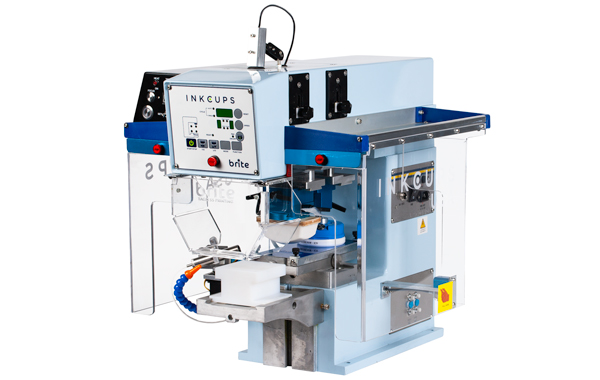 Tagless Printers
 Cylindrical Inkjet Printers
 UV Flatbed Printers
 Pad Printing Machines
 Pretreatment Systems
 Inkjet Printing Auxiliary
 Laser Plate-Makers
 Inkjet Printing Supplies
 Pad Printing Supplies
 Tagless Supplies
Add Your Comment