 Tagless Printers
 Cylindrical Inkjet Printers
 UV Flatbed Printers
 Pad Printing Machines
 Pretreatment Systems
 Inkjet Printing Auxiliary
 Laser Plate-Makers
 Inkjet Printing Supplies
 Pad Printing Supplies
 Tagless Supplies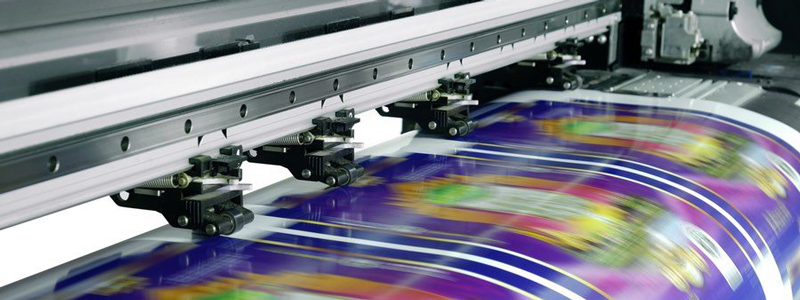
Updated July 23, 2026
Large format printing, also known as wide format printing, refers to projects that use larger-than-standard sheets of paper or canvas. Large format printing is widely-used by all sizes of businesses to use for their advertising and marketing materials. One of the benefits of printing large format is the ability to print large designs and get your company message to stand out from your competitors. To get the most value out of large format printing, there are some vital things to know about the large format printing process.
1. How the Large Format Printing Process Works
The printing process for large format printing is very similar to that of digital printing, which makes it an ideal process for full-color items. The press will lay down toner through the use of large nozzles. The ink is directly applied to the product, which creates a much more authentic feel than mounting printed pieces to substrates. The printing process is quick like digital printing and has the ability to produce high-quality images and photographs.
2. What Types of Printers are Used for Large Format?
Large format printing presses are often either flatbed printers, roll-to-roll printers, or a combination of both. In a flatbed printer, a substrate will be placed on the bed, which will act as a carrier to propel the material through the printer. During the printing process, the UV light hits the liquid ink and turns it into solid ink on the chosen substrate. Flatbed printers are great options for those who are looking to print directly on thicker or less traditional substrates.
A roll-to-roll printer is often used to print items such as banners, canvas, or printed pieces on flexible materials that will come on rolls. The roll of material will be loaded on one side and be carried through the printer where it will be re-rolled onto another uptake roller. These types of large format printers are ideal for long runs of flexible material as the process can be streamlined and production can move faster with less interruption.
In combination machines, the flatbed will be able to be removed, and the rolls on each side attached giving it the ability to function as both types of machines.
3. What Are the Main Differences Between Flatbed and Other Large-Format Printers?
The primary difference between large-format printer types is how they hold and transport the material being printed. Flatbed printers are generally best for rigid sheets and finished objects, roll-to-roll printers are designed for flexible materials supplied on rolls, and hybrid printers can accommodate both rigid and flexible media.
When to Choose a Flatbed Printer
Choose a flatbed printer when you primarily print rigid signs, panels, boards or objects that must remain level and securely positioned. Flatbeds are also useful for thicker, heavier or irregular products that cannot be safely transported through a roll-feed system.
When to Choose a Roll-to-Roll Printer
Choose a roll-to-roll printer when most of your work involves flexible media, especially long banners, adhesive vinyl, wall graphics or other applications requiring continuous lengths.
When to Choose a Hybrid Printer
Choose a hybrid printer when your operation regularly switches between rigid panels and flexible rolled media and you want both capabilities within one production system.
4. How Should Files be Prepared to Create the Best Finished Product?
Due to the size of the pieces being printed, file preparation becomes essential to ensure that you end up with a high-quality product. When designing your files, you will need to note that the maximum width of most large format printers is 61″ or less and the length will often be determined by the length of the material and supplies used. For banners and other roll-to-roll print material, the length can virtually be any length.
To produce the best quality image, you will need to use the highest resolution file possible to make sure the quality does not become compromised when it is enlarged. Additionally, you will want to account for the fact that the printers will print in standard CMYK breakdown, so creating your files in these separations will give you the best results.
Looking for large format printing supplies? See our
5. Can Large-Format Printers Be Used for Outdoor Applications?
Yes. Large-format equipment like UV flatbed printers can be used to produce outdoor signs, display panels, directional signs, event graphics and other exterior applications on compatible rigid materials. Common outdoor substrates include corrugated plastic, aluminum composite panels, treated metal, acrylic and other weather-resistant sign materials.
However, outdoor durability depends on the complete print system. Important factors include:
- The UV ink formulation
- The substrate and any surface coating
- Ink adhesion and pretreatment
- Direct sunlight and UV exposure
- Rain, moisture and temperature changes
- Abrasion, chemicals and routine cleaning
- Whether a laminate, clear coat or protective varnish is applied
- The expected service life of the sign
Flatbed printing is particularly useful for outdoor signage made from rigid boards and panels because it allows the design to be printed directly onto the finished sign material. Flexible outdoor banners and vehicle graphics are generally better suited to roll-to-roll or hybrid large-format printers.
6. What Products are Large Format Printers Used For?
One of the most versatile things about large format printing is the fact that it can be the ideal printing process for many products. Some of the most common products that large-format printing is used for are:
- Banners
- Point of Purchase Displays
- Wall and Floor Graphics
- Tradeshow Signage
- Posters
- Yard Signs
7. Which Printer Is Best for High-Quality Signage?
The best printer for high-quality signage is a UV flatbed system that matches the size, material and production volume of the signs being produced. For rigid signs, displays and panels, buyers should prioritize high print resolution, a stable vacuum bed, accurate media registration, white ink capability and compatibility with materials such as acrylic, corrugated plastic, foam board, wood, glass and metal.
Important features to evaluate include:
- Print area: The bed must accommodate the largest sign or panel you plan to produce.
- Resolution and printhead technology: Higher-resolution output supports fine text, photographic images and detailed brand graphics.
- White ink: White ink is useful for printing on clear, transparent, metallic or dark-colored substrates.
- Varnish or clear ink: Optional clear layers can add gloss, texture or selected visual effects.
- Outdoor requirements: Verify the outdoor durability of the complete ink, substrate and finishing system.
Larger signage operations may require a wider-format flatbed, hybrid or roll-to-roll printer designed for oversized panels, banners or continuous media.
8. What are Some Benefits of Large Format Printing?
There are many benefits to using large format printing for your printing projects. You will not only have the advantage of a large area to display your piece, but also the benefits of UV cured ink that will make your piece more durable and able to withstand elemental conditions such as rain, heat, and sunlight without incurring damage. Another benefit of large format printing is the ability to print on a number of surfaces. You can print on almost anything that will fit through the carrier of the printer including:
- Vinyl
- Cloth
- Glass
- Wood
- Foam Board
- Corrugated Plastic
- Metal
No matter what your graphics needs, large format printing can provide you with the benefits of durability as well as a large display area allowing your message and products to be eye-catching and provide you with the visibility you need to stand out.
Want more information about UV inkjet printers? Check out our Ultimate Guide to UV Inkjet Printers
Pleasant Printing
Really loved this post. The way of explaining each and every point is amazing.
December 19, 2020
Printing Etc
I'm very thankful that I found this informative blog. Thank you for sharing your knowledge...
August 23, 2020