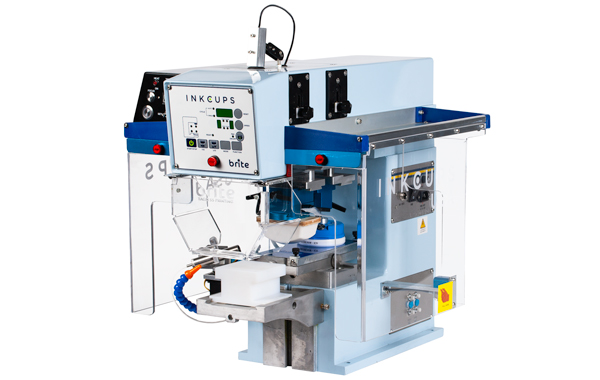
 Tagless Printers
 Cylindrical Inkjet Printers
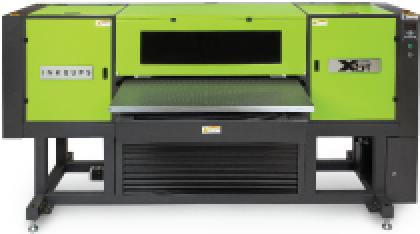 UV Flatbed Printers
 Pad Printing Machines
 Pretreatment Systems
 Inkjet Printing Auxiliary
 Laser Plate-Makers
 Inkjet Printing Supplies
 Pad Printing Supplies
 Tagless Supplies
Updated July 7, 2026
What Is Digital Printing on Glass?
Referred to under an umbrella of terms such as rotary printing, cylindrical printing, digital cylinder printing, or direct-to-object printing, these are all used to describe the method of printing directly onto cylindrical items like glassware using an industrial cylindrical digital printer.
Digital printers use computer software to convert images and apply them directly onto substrates that are cylindrical, straight wall, or tapered in nature. In the past, sublimation and screen-printing were the most popular decorating options for glass applications, but as digital technology evolved beyond printing on flat items, digital has become the best method for high-quality glass printing.
Glass Printing Predecessors
Glass drinkware has traditionally been decorated using pad printing, sublimation, and screen printing, each with real limitations in design capability, sustainability, or speed. Pad printing, for instance, is generally limited to one or two colors, since higher color counts demand a level of precision the process struggles to deliver.
To see how digital printing on glass stacks up compared to sublimation, read: Digital Drinkware Printing vs. Drinkware Dye-Sublimation
Sublimation is the process of printing a graphic onto a plastic sleeve. which is then heat-applied to the glassware until it adheres. While this method delivers full-color graphics, seamless artwork is nearly impossible — there’s always a visible line where the two edges of the design meet. The process also generates significant plastic waste, since each sleeve is discarded after a single use. And because switching between parts isn’t quick, inventory management becomes critical: one missing or misprinted piece can lead to long lead times and lost orders.
Screen printing can’t match the photographic detail of digital printing or sublimation, but it’s still widely used for logos and simple graphics on cylindrical glass. It allows for 360-degree coverage, though results are never fully seamless (a registration mark is always visible on the finished piece). The process also consumes large amounts of ink and other consumables that can’t be reused, raising environmental concerns. And while screen printing is fast for single-color designs, multi-color jobs require drying time between each color, slowing the process down.
Early digital solutions for cylindrical printing included rotary attachments for flatbed printers, rather than a dedicated rotary UV printer. But even then, this method showed similar limitations to the traditional methods. With new innovations in digital technologies, there are now machines built specifically for imaging objects with round cross sections.
The Benefits of Switching to Digital Printing on Glass
Faster Production and Changeovers
Digital printers eliminate screens and transfer steps, allowing operators to switch designs in minutes instead of hours.
High-Quality, Full-Color Output
UV inkjet technology produces sharp images, gradients, and Pantone-matched colors with strong consistency.
Improved Durability
With proper pre-treatment, digitally printed glass can withstand repeated industrial and residential dishwashing.
Reduced Waste
No transfer films, excess inks, or disposable screens are required, making digital printing more sustainable.
Scalable Workflows
Software tools streamline artwork prep, automate file setup, and reduce manual design time.
How to Print on Glass (Step-by-Step)
Printing on glass using digital technology follows a straightforward workflow:
- Prepare the artwork using RIP or artwork software
- Clean and pre-treat the glass surface (primer, plasma, or corona treatment)
- Load the glass into a cylindrical UV inkjet printer
- Send the digital file to the printer
- Print directly onto the rotating glass surface
- Cure the ink instantly with UV LED light
Example: A branded pint glass can be printed with a full-wrap, photo-quality design in one cycle—without seams or transfer films.
With the right printing machine, businesses can quickly benefit from digitally printing on glass.
Why Go Digital with Inkcups?
Companies are turning to digital printing because of its array of benefits, andInkcups has identified the most important areas for ensuring customers receive the best experience possible.
Responsive Service & Support: Most technical issues are resolved the same day, often by phone, with remote troubleshooting via TeamViewer for anything more complex. For hands-on needs, certified technicians are strategically located worldwide.
Broad Ink Selection: With six digital UV LED ink lines, Inkcups offers formulations suited to a wide range of substrates, including inks specially designed for strong adhesion to glass.
Streamlined Workflow Tools: ArtPrep artwork software cuts prep time dramatically, letting operators adjust layers, image placement, and trapping in seconds, turning a 15-minute manual task into a matter of moments.
Flexible Pre-Treatment Options: From simple primer wipes to plasma and corona systems, Inkcups offers pre-treatment solutions built for durability, ensuring prints hold up to repeated industrial or residential washing.
Reliable, Consistent Printing: Features like out-of-round detection help prevent head crashes and reduce downtime, while transparent pin curing eliminates the need for messy “foxtail” stuffing agents, keeping glass clean and print heads protected.
Real-Time Production Data: Built-in production logging tracks print speed, ink usage, and operator efficiency, exportable to Excel for smarter forecasting and decision-making.
User-Friendly Design: Fast changeovers (under 5 minutes) mean less downtime and more time printing, even for less experienced operators.
Superior Image Quality & Color Accuracy: Advanced RIP software (with optional upgrades) delivers precise color profiling, gamut reporting, and Pantone® matching .
Given its advancement, digital printing is becoming more popular than ever. Nearly instant dry times, excellent adhesion properties, full-color images are only the tip of the reasons to opt for a cylindrical printer for all of your glass drinkware needs.
View our video series: The Benefits of Going Digital with Inkcups
Learn more about our digital cylinder printing equipment.
Add Your Comment