By Benjamin Adner, Inkcups Now President
Published in Plastics Decorating, January/February 2005 issue.
The concept of computer to plate printing (CTP) is not new in the printing industry and is now used on a daily basis in the offset and flexography industries. The screen printing marketplace also has seen substantial growth in the use of direct-to-screen systems; however, in the pad printing arena, the concept and equipment for computer to plate printing are still very new (although are coming on extremely strong). With recent machine developments and improvements, laser plate engraving systems are beginning to take a significant hold in this area, and the market appears to be ready for a total conversion over the next couple of years.
Computer to plate printing systems, as they apply to pad printing, enable the user to take a digital graphic file and by means of a laser, make high-quality steel and polymer pad printing plates (clichés) designed to be laser engraved without the use of film, exposure systems, or chemicals. Advancements to the process, increased efficiency, direct cost savings, and superior imprint quality have produced such dramatic improvements over other existing technologies that those who have seen the results become instant converts.
Over the past few years, advancements to the overall computer to plate printing process have produced highly effective results. Among these results are the following benefits:
In addition, because the computer to plate printing process requires less consumable materials, CTP users are able to enjoy a number of cost-saving benefits:
Finally, as far as savings in time and efficiency are concerned, computer to plate systems offer a number of benefits that directly affect the bottom line:
There is much to know about the computer to plate printing technology that is available today and when making a decision on the purchase of CTP equipment, one should be knowledgeable in a few areas that are key to the evaluation process: laser type, software capability, and system features.
To date, there have been three styles of lasers used to make steel and polymer plates: diode-pumped YAG, Ytterbium or YAG fiber laser (YAG wavelength), and CO2 laser. The primary differences between these units are the maintenance required, the spot size, and the ability to ablate (etch) various materials.
Maintenance. The diode-pumped YAG has a diode bar that heats up and can warp after about 10,000 hours of use, thereby requiring costly replacement. The YAG fiber laser has no diode bar and therefore, has no maintenance for up to 70,000 hours of operation. The CO2 laser also does not require a significant amount of maintenance.
Spot Size. The wavelength of a YAG laser (1.064 microns) is exactly ten times smaller than the CO2 wavelength (10.64 microns) and therefore, has a resulting spot size that is 10 times smaller than a CO2 (in the same set-up). YAG lasers are able to provide more detailed graphics than CO2 when both laser types are put into the same machine set-up.
Materials. YAG lasers are ideally suited for metals, but their wavelengths are not easily absorbed by many other materials (wood, acrylic, plastics, fabrics, etc.) A CO2 laser beam has much more latitude and can be absorbed easily by many organic materials such as wood, paper, plastics, glass, textiles, and rubber, but is not easily absorbed by metal.
The capability of the laser software is a critical element for producing high-quality pad printing plates that are able to meet today’s demanding quality standards. When lasers were first introduced to make clichés, they were only able to engrave plates with straight “open etch”; they were incapable of engraving bitmap, gradient, halftone, or process images; and they were not able to handle industry-standard software.
Three of the main file formats that are used in the industry today are .ai (Adobe Illustrator), .dxf (Corel Draw, Autocad, Flexisign), and .bmp (gradients, process images). It is critical that the laser software is able to handle the latest revision of all of these standard file formats so that any laser polymer plate making system can be seamlessly integrated into the workflow of the target company.
Other critical software parameters that enable the operator to completely control image depth and appearance for the “ideal” laser cliché include dot pattern and depth. The halftone or dot pattern applied to the target image can be programmed in with hatch parameters. The “hatch” or separation between the laser lines is applied to the image and can be varied depending on the type of image. For fine line graphics, a small hatch can be applied; for bold graphics, a larger hatch will prevent “scooping”; and for difficult graphics that combine bold and fine lettering, different hatch patterns can be applied to the same image.
Precise depth control is typically achieved by doing multiple passes of the same image so that a small amount (.0002-3” depending on settings) is removed on each successive pass of the laser. The power and frequency of the laser also can be varied to fine tune the plate depth to provide the best printing plate for the type of ink, production speed, and substrate.
Computer to plate printing systems have several available features to consider:
The selling price of the laser systems in the market today still may be out of reach for some decorating shops that do not produce many plates, but for some of the larger shops that make many polymer plates or for those that outsource many of their steel plates, computer to plate laser systems can be easily justified. As with any innovation, it is expected that the selling price of these systems will decrease as the computer to plate systems become simplified and the technology evolves.
Computer to plate printing systems for the pad printing industry is a natural progression of digital technology and appear to be in a strong position to become the de facto standard for making pad printing plates – they provide pad printing plates of superior quality at a lower cost with faster turnaround.
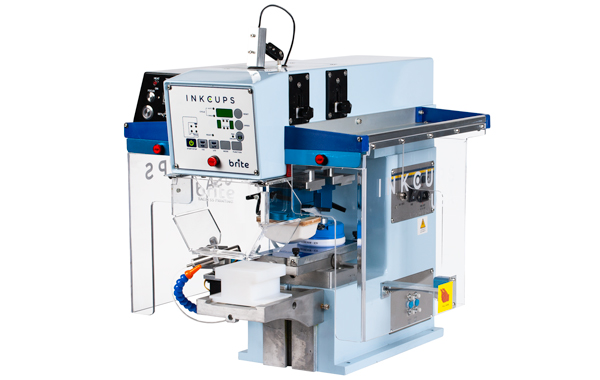 Tagless Printers
 Cylindrical Inkjet Printers
 UV Flatbed Printers
 Pad Printing Machines
 Pretreatment Systems
 Inkjet Printing Auxiliary
 Laser Plate-Makers
 Inkjet Printing Supplies
 Pad Printing Supplies
 Tagless Supplies