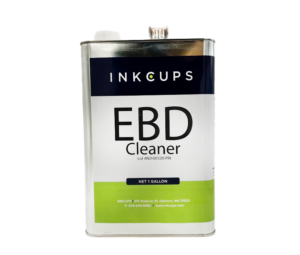
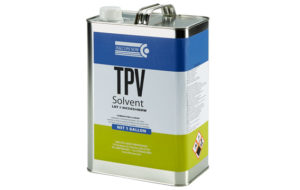
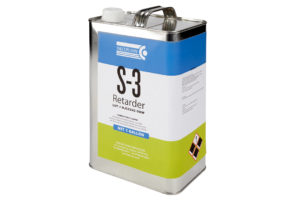
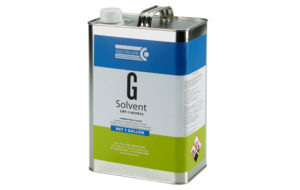
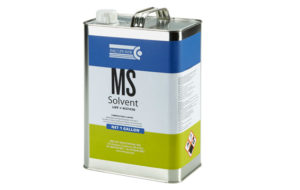
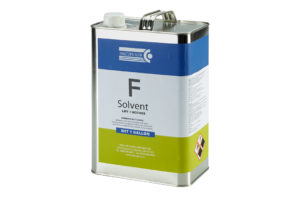
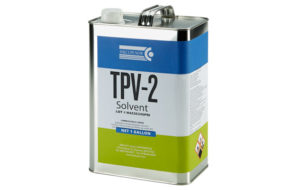
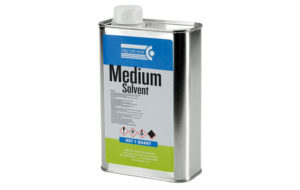
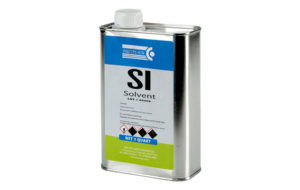
Pad Print Ink Solvents: Key Considerations
- Inks and substrates must becompatible with each other
- Printing equipment must have proper exposure to air for substrate type
- Environmental regulations around Volatile Organic Compounds (VOCs)
- Fast solvents are used for dry environments/rapid printing, Slow solvents are used for humid, slower printing.
Pad Print Ink Solvents FAQ
What is a pad print ink solvent?
A pad printing ink solvent is a specialized chemical catalyst that adjusts the viscosity of ink, controls the drying speed, and encourages proper ink transfer from the pad to the substrate.
When should I use a solvent for pad printing ink?
Solvent is best used when a pad printing ink needs to be broken down or diluted. By chemically adjusting the viscosity of the pad printing ink with a solvent, the ink adheres to substrates more readily and dries more evenly.
Does every pad printing ink need a solvent?
Effectively, yes. Almost all pad printing inks require some kind of solvent or thinner so that the ink transfers cleanly from the plate to the pad itself. Some inks are classified as “one-component”, and the one component they need to be mixed with is a solvent.
Are there any downsides to using a solvent on pad printing ink?
Yes, using too much solvent can break down a pad printing ink beyond the point of usability, and the action of adding solvent to pad printing ink can create high VOC emissions that are toxic without proper ventilation. An ink that has too much solvent added with bleed on the substrate and can damage batches of product and equipment.
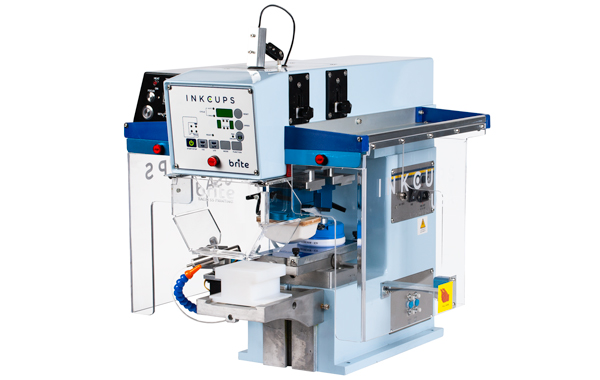 Tagless Printers
 Cylindrical Inkjet Printers
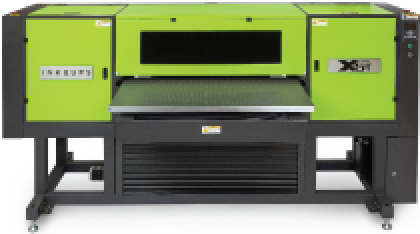 UV Flatbed Printers
 Pad Printing Machines
 Pretreatment Systems
 Inkjet Printing Auxiliary
 Laser Plate-Makers
 Inkjet Printing Supplies
 Pad Printing Supplies
 Tagless Supplies (tagless.inkcups.com)